Travel News

Istanbul Airport Terrorist Attack

Istanbul Airport Terrorist Attack 300 238 Greg Ellifritz

On June 28, 2016, three ISIS terrorists conducted  simultaneous attacks on the unsecured areas of Istanbul’s international airport.  They entered the airport armed with AK rifles and suicide bomb vests.  They split up, went to separate areas of the airport and began shooting and blowing up their bombs.  A total of 42 people were killed and 238 more were injured.


Why should we care?  We should care because the same terrorists have stated that they will perform similar attacks in the United States.  We can study the tactics used in their overseas attacks and develop countermeasures before they bring them stateside.  Here is a discussion of the key elements of the attack and what we all need to do in order to avoid being killed if a similar event happens here.


-Guns and Bombs- All of the terrorist attacks with the largest number of fatalities involve both guns (usually long guns) and explosives.  To prepare for an active shooter requires that you also be prepared to deal with a terrorist bomber.  The two groups use both methodologies simultaneously.

DM GRAB - Ataturk Airport International Terminal terrorists images appeared on the departures floor. Images of the Russian national airline Aeroflot experienced moments of horror in front of the bank where the check-in office and this was reflected in the cameras. (Haberturk News Centre)

One of the terrorists who initiated the attack with rifle fire.


Most shooters don’t know enough about bombs.  You must understand how terrorist bombs are detonated, how they are used, and how far away you must get to be safe.  Take a bomb class.  Until then read this article.  Then understand about secondary devices.  This type of information can truly save your life.


– Three Pronged Attack.  A hallmark of Al Qaeda (and now ISIS) attacks is the three pronged attack.  They are continuing the trend here with three attackers at the airport.  They use multiple attackers to ensure that at least one makes it to the target if the others are interdicted by the police before arriving on site.  It’s basically a back-up plan.  In this case, the three attempted to enter the airport.  They were stopped by police at the entrance of the building (this airport has additional metal detectors at the airport entrance).  When they realized they couldn’t make it through security with their guns and bombs, one terrorist pulled out a gun and began shooting at police.  That provided enough of a distraction to allow the other two terrorists to slip inside unnoticed.


The key thing to remember is if you witness one terrorist attack, you should assume that more are coming.  There will always be a followup attack.  Don’t hang around.  Get yourself to safety.  The followups may not be in the same location like these were.  Police need to be aware of the three pronged strategy.  If one attack occurs, the police should be deploying additional resources to protect other pre-identified targets for attack.


– Heavy clothing and large bags remain the best indicators of a potential bomber.  Take a look at the photo below from this article.  All three terrorists are wearing heavy coats that were wholly inappropriate for the June Mediterranean weather.


Note the terrorists' heavy coats, hiding bomb vests

Note the terrorists’ heavy coats, hiding bomb vests

The heavy coats are what attracted the initial police attention.  The cops thought these guys were thieves or robbers based on their dress.  Pay attention to people wearing clothing inappropriate for the weather conditions and people who are carrying large bags.


– If you plan on shooting a suicide bomber, you must realize that it is likely a suicide mission.  One of the bombers is running through the airport with a rifle in hand.  He is shot from ambush by a courageous police officer.  The terrorist falls to the ground and his rifle goes skidding across the floor.  The cop approaches, noticed that the man is wearing a bomb vest and runs away.  The man detonates.  The cop was killed in the explosion.  Watch the video of the incident below:


It’s likely here that the cop didn’t know the terrorist was armed with a bomb until after he shot.  The correct course of action after seeing the bomber trying to detonate is to fire multiple head shots.  The problem is that even if you immediately incapacitate the terrorist with head shots, there’s no guarantee that you will be safe.  The bomb could be on a timer.  The bomb could be remotely controlled by a handler.  You just don’t know.  That’s what I mean.  Taking the shot may save the day.  It may also get you killed.


For a hand carried or worn bomb vest, one must be between 200 and 400 meters away from the blast to be safe from the shrapnel.  None of us are going to make a pistol shot through a crowded airport at 200 meters.  If you are close enough to take the shot, you are within range of being killed by the bomb.


Luckily, this cop’s shots to center mass didn’t detonate the explosive vest.  That wasn’t the case in Paris, where one of the cops hit a bomb vest and blew up the bomber.  The unstable homemade explosives in the bomb vest may detonate when hit by a bullet.  That means head shots should be the rule.  How far away can you reliably make a head shot under stress?  Most of you won’t be able to do it beyond 50 feet.  Some of you may have to be much closer.


The bad news is that in all suicide bombing attacks studied, victims within five meters of the bomb suffered 100% fatalities.  At the 15 meter range (around 50 feet), the victims were slightly more likely to live than die after the blast.  Anyone inside of 50 feet is more likely to die than live.  How far away can you guarantee a head shot again?  If you are close enough to make the shot, you will have at best a 50% chance of survival if the bomb blows.


These are sobering statistics, but they are critical to understand.  If you choose to play the hero and engage the bomber like this heroic cop, you will likely suffer his same fate.


– The terrorists may be hiding their weapons during the attack.  This article describes how one of the bombers was concealing his handgun after firing several shots.

“He turned around and started coming towards us. He was holding his gun inside his jacket. He looked around anxiously to see if anyone was going to stop him and then went down the escalator. We heard some more gunfire and then another explosion, and then it was over.'”


Note this picture from The Daily Mail of another killer with a long gun.  See how he is attempting to conceal the weapon?


Terrorist hiding long gun

Terrorist hiding long gun


Adaptation on the part of the killers and the defenders is constantly occurring.  Both groups are learning from the mistakes made in past attacks.  In past active killer events, the killers brazenly walked their killing fields with guns exposed, targeting anyone they could find.  Now we are seeing killers exercising more caution.  As cops and armed citizens are training to hunt and kill the attackers, the attackers know that if they are obvious about carrying a gun, they will likely be killed before getting the body count they desire.


When you are either fleeing the scene of an active killing or hunting the killer, watch people’s hands.  The killer might not be running around with a shouldered long gun as he does his killing.


– Unsecured areas of airports are very vulnerable.  There have been numerous attacks to the unsecured areas of airports all around the world.  Get inside and through security as quickly as possible.  Although airport security is a joke, you are still far more likely to get killed in the unsecured area than past the body screening machines.


Don’t dawdle in the unsecured area.  Avoid checking baggage if possible.  Print your boarding passes at home.  Fly first or business class whenever possible so that lines at the ticket desk are shorter.  Get TSA Pre-check or Global Entry to speed your way through security lines.  Anything you do to speed up the time you spend in the unsecured area of the airport will improve your chances of survival.  One study showed that for every 15 minute time period that you avoided the security line, your chance of surviving a terrorist bombing was improved by 50%.  Again, anything you do to make it through security faster will improve your odds of survival.


– You must be an active participant in your own rescue.  That’s a saying from my friend Dave Spaulding and it fits this situation perfectly.  Look at this video.  Watch the response of the victims here immediately following the blast.  They are sitting down on the floor, immobile and cowering in fear with no idea what to do.  They are sitting ducks if the attack had additional components or in the event another bomber/shooter returned to the area.


Get out!  Don’t wait for an inept police force to save you.  Find the closest door and use it.

Daily Mail summary of the incident

Airport Kidnapping

Airport Kidnapping 634 357 Greg Ellifritz

Take a look at this article/video of a foreign tourist being kidnapped in a Bangkok airport.  The kidnappers used a five-man team and had ten more airport and immigration officials on the payroll to make sure things went smoothly.

Snatched at the airport

This is certainly a unique and rare crime.  It might still be worth the mental effort to figure out how to avoid/escape such a well-coordinated attack.


If you saw this, would you recognize a kidnapping was taking place?

Crime Rates in Mexico

Crime Rates in Mexico 777 437 Greg Ellifritz

I’ve vacationed in Mexico almost two dozen  times. I’m going back down there in a few weeks as it is one of the few places that is open unimpeded to American travelers.  Whenever I go, everyone asks me “is it safe?”


The answer always depends on where you are staying and what activities you are participating in.


Here is a nice interactive crime map that shows which Mexican states have higher than average crime rates and how those rates have changed over time

Useful Site to Research Crime Statistics for Mexico


The post is from the Two Expats Mexico website.  I find the site exceptionally useful for information about traveling or living in Mexico from a couple of Americans who moved there.  They also put out additional content on Patreon.


I am one of their Patreon supporters and I’d encourage you to check them out.

Assessing Neighborhood Safety When Traveling

Assessing Neighborhood Safety When Traveling 660 880 Greg Ellifritz

I occasionally am asked how I assess the relative safety of the areas I inhabit when I travel to third world countries.  Different customs and language change societal norms, but these factors remain relatively constant no matter where you are in the world.  Take a look at this article and learn how to assess the baseline.

The Collective Mood and You


It will help you make a good decision.  The techniques are mentioned by the authors of Left of Bang, an excellent book to check out if you want to learn more about baseline behavior profiling.


In addition to the article’s advice, I would also suggest that you might take a look at a couple additional factors.  These guidelines may be pretty basic, but using them will give you a quick assessment of your relative safety in any neighborhood in the world:

  1. Are there lots of armed guards?
  2. Do the properties seem to be run down or not cared for?
  3.  Are people in the area walking in pairs or small groups rather than walking alone?
  4.  Is there a lot of graffiti present on the walls?
  5.  Are there obvious security measures (like broken glass embedded atop walls, electric fences, barbed wire, etc.) present?
  6.  Are there lots of people are aimlessly “hanging out” in the street?

If you answer “yes” to most of these questions, you may not be in the world’s safest place.  It’s time to move on.


For a more detailed explanation of these concepts, read my book Choose Adventure- Safe Travel in Dangerous Places.


How would you assess the safety of this neighborhood?
The world famous “Black Market” in Ciudad del Este, Paraguay

Pandemic Flight Precautions

Pandemic Flight Precautions 283 178 Greg Ellifritz

I just flew out to Phoenix, Arizona to take a training class.  It was my first flight since early February.  Flying in a mask was strange.  Both legs of my flight were completely full.  The planes and airports seemed exceptionally clean.  I guess it remains to be seen if all of these precautions worked, but I am not ill yet.


The rules are constantly changing.  We really don’t know what works best.  Most of us are guessing and trying to establish best practices for keeping healthy.


I’ve found the articles below to be helpful.  Read them and get some ideas as to what tactics other travelers are employing.  Take Bruce Lee’s advice.  “Absorb what is useful, discard what is useless and add what is specifically your own.”


Flying Isn’t Just a Big Coronavirus Risk


If You Have To Fly in a Pandemic, Here’s Where to Sit on the Plane


How Rules Have Changed at TSA Checkpoints


CORONAVIRUS AND TRAVEL: WHAT YOU NEED TO KNOW (PLUS RESOURCES)


I flew on the 4 biggest US airlines during the pandemic to see which is handling it best


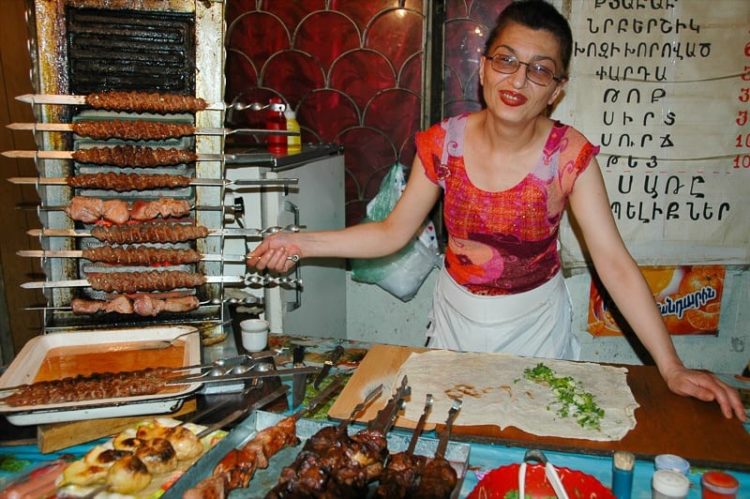
“Street Meat”

“Street Meat” 750 499 Greg Ellifritz

Most guidebooks will instruct you to “never eat street food.”


That’s bullshit.  Street food is often the safest option for travelers.  It’s prepared fresh and is still hot.  It hasn’t sat overnight on a rat and cockroach infested counter in a restaurant kitchen waiting to be rewarmed in a microwave.  Besides that.  It’s delicious.  Just look at all of these amazing street foods at the link below:


Best Street Food Around the World: 50 Favorite Street Food Dishes


I’ve eaten most of the foods listed for the countries I’ve visited and have not yet gotten sick from any “street meat.”.


Look for a vendor who is cooking the food in front of you and a long line of locals.  If you do that, you’ll likely be fine.


If you want some more information on street dining, pick up a copy of my book or check out the links below.


How to Eat Street Food Anywhere in the World Without Getting Sick

THE ULTIMATE STREET FOOD SAFETY CHECKLIST: HOW TO EAT LIKE A CAUTIOUS LOCAL


Some of the above links (from Amazon.com) are affiliate links.   As an Amazon associate I earn a small percentage of the sale price from qualifying purchases.

If you would like to further support my work, head over to my Patreon page.


Using Your Smart Phone Internationally

Using Your Smart Phone Internationally 675 405 Greg Ellifritz

This is a great website to bookmark if you are interested in communications issues.  It’s the best site  on the internet for comparing international SIM cards and data plans.  Read this article in particular:

International SIM Card Comparison: Which Is Best?


For those of you who have never used your phone in another country, there are basically three ways to do it.  You can use your own phone/data plan, but it’s often absurdly expensive.  You could also buy a local SIM card.  You get a local phone number and it’s really cheaply.  The downside is that it’s a pain in the ass to buy a SIM card and get it recharged in some countries.


A third option is to buy an international SIM card.  These are more expensive than the local options but work in multiple countries.  This article compares the features of the best international SIM cards available.  Recognize that your phone needs to be unlocked to use this strategy.  If you are on a contract with many US cell companies and haven’t paid off your phone, it is likely still locked.


ATM Card “Skimmers” in Foreign Countries

ATM Card “Skimmers” in Foreign Countries 580 487 Greg Ellifritz

As far as travel questions go, one of the most common inquiries I get is regarding how to safely make currency withdrawals from the bank and how to convert American dollars into the local currency.  I wrote an entire chapter on this topic in my book.

Needing local currency is not as important as it was 20 years ago.  Even in the developing world, grocery stores and restaurants almost always accept credit cards.

To summarize, I recommend that if the traveler needs local currency that he or she should simply withdraw local currency from a nearby bank ATM machine.  Exchange rates will be better than you get at the border money changers and ATMs are common in most cities.

The one thing you have to be aware of is the installation of a card “skimmer” on the ATM machine.  The articles below detail how card skimmers work and how they are used in Mexico.  The author’s advice holds true in most of the other world as well.  Read these three articles to get a comprehensive understanding of the issues involved:

Tracking a Bluetooth Skimmer Gang in Mexico

Tracking Bluetooth Skimmers in Mexico, Part II

Who’s Behind Bluetooth Skimming in Mexico?


ATM skimmers used to be pretty rare.  They were large contraptions that fit over the outside of the card reader on the ATM.  They were most commonly seen in tourist areas on “stand alone” ATMs that weren’t regularly serviced.

Now it seems that the ATM technicians are installing small bluetooth compatible skimmers to steal your data inside the machines themselves, at least in Mexico.  My best advice is to avoid ATMs in obvious tourist areas and to use the ATMs that are inside a bank.  Although not a foolproof strategy, doing this will at least limit your chances of having your card data stolen.


One other thing.  For foreign travel, you want a traditional ATM card, NOT an ATM debit card.  The traditional cards have daily withdrawal limits so the crooks can’t clean you out.  With the debit card, they can take out more money and charge things to your account.  The traditional ATM card will help limit the damages if your data or card is stolen.


Drinking Alcohol Safely in Foreign Countries

Drinking Alcohol Safely in Foreign Countries 540 720 Greg Ellifritz

Have you heard news reports about tourists being served tainted, poisoned, or adulterated alcohol in foreign countries?

It’s relatively rare, but it certainly happens.  There have been a couple recent articles written that provide tips to avoid being poisoned.  If you want some background info, check out:

How to Drink Safely On Vacation

Know the Risks When Drinking Spirit-Based Alcohol Away From Home


All of that is great advice, but I’ll share some additional experiences from nearly two decades of consuming homemade and locally made alcohol in third world countries.  To establish my drunken bona fides, here is some photographic evidence of my taste for third world hooch.


Roadside moonshine in El Salvador


Local rum with a friend in Cartegena, Colombia


I have no idea what the bartender is pouring down my throat. Bogota, Colombia


After the shots in Bogota, we set the bar and ceiling on fire with local moonshine.


Guifitty, a local rum/herb mixture in Honduras.


Home made rice wine on the street in Saigon, Vietnam.


With my bartender in Tanzania drinking banana beer


Mixing moonshine and Tang to create a beverage that tasted OK despite no refrigeration on an un-named island off the coast of Panama.


Buying moonshine straight from the still (in an old Jagermeister bottle) in rural Costa Rica.


Despite all of these insane adventures, I’m still here.  And I’m not even blind.  Here’s my personal strategy when evaluating the local stuff.


As a person who has enjoyed local brews on five different continents, I can tell you there is a safe way.  You don’t buy this stuff at your resort or at a tourist liquor store.  You ask a local to take you to the person who makes it.  Taxi drivers, hotel concierge staff, and tour guides know where to get the local homemade brew.


When you arrive you ask to sample a shot.  Of course, you are polite and offer to buy the seller a shot as well so that he drinks with you.  If he won’t drink his own brew, run away.  If he drinks with you (out of the same bottle) you are probably pretty safe.   I’ve done this a lot of places and I’m not blind yet.


It’s safest to buy your own alcohol at the duty free shop in the airport, but where’s the fun in that?  If you want to try something a bit more adventurous, remember my strategy.

Escaping Criminal Restraints

Escaping Criminal Restraints 620 974 Greg Ellifritz

Are you worried about being taken hostage in a foreign country?  You might like to read the article below.  It is a reasonably comprehensive primer on escaping criminal restraints that would be useful to all my friends who travel internationally.


How to Escape Handcuffs, Zipties, and Duct Tape


One additional escape tool that I have found exceptionally useful is the Advanced Personal Escape Kit from OscarDelta.  This piece of gear masquerades as a necklace that you can wear under your shirt.  It’s barely noticeable when worn.  The “necklace” is really an exceptionally tough cord that can be used as a garrote or as a friction saw for cutting through flex cuffs.  Attached to the cord is a handcuff key, a handcuff shim, a mini glowing light stick, and an exceptionally hard striking disc that will break window and automotive glass.

Having all these items on a cord around your neck in one place is handy, but I would still suggest having a few smaller keys or shims stashed in other locations as well.  You don’t know how thoroughly you will be searched after you are kidnapped.  Losing all of your tools at the same time when your captors find your necklace won’t help your long term survival.  The more items you have, the more likely one or more will be missed on a hurried search of your clothes and body.  That makes your escape chances significantly greater.

Tools are important, but skills and mindset are even more valuable.  Consider purchasing some of these escape tools and carrying them with you.  But like most defensive tools, they require practice to master.  Merely having the tool isn’t enough.  Practice until you can use the tool to quickly escape restraints under any and all possible conditions.  Only then will you truly have options.